Sampling
Garment Sample Approval Checklist Before Bulk Production
Check fit, measurements, materials, decoration and care before bulk production. Build a garment sample approval record with clear decisions and corrections.
Quick answer: Approve a garment sample against written requirements for fit, measurements, materials, decoration, construction and care performance. Record what passed, what needs correction and which version will control production. A good-looking photograph does not replace checking the physical sample or resolving an open specification.
This garment sample approval checklist is for clothing brands moving from development into a bulk order. WILDYET coordinates sample review and production follow-up with partner factories from Yiwu, China. The proposed record below helps organize that discussion; the actual acceptance criteria must be agreed for your garment and order.
Identify the sample before judging it
Record the style code, sample size, color, date received and tech pack revision. Note whether this piece is intended to demonstrate fit, fabric, decoration or a complete pre-production combination. A fit sample made in substitute material should not silently become your approval for final fabric and color.
Photograph the full front, full back, relevant details and any labels identifying the sample. Keep the original files with the written comments. If several samples are under discussion, give each a distinct reference so that a change request cannot be applied to the wrong piece.
The clothing tech pack checklist explains how to establish the requirements these samples will be checked against.
Check measurements and fit separately
Lay the sample in the agreed position and follow the point-of-measure descriptions. Record the measured value beside the target and agreed tolerance. If a point is unclear, resolve the method before deciding that the garment is too large or too small.
Then assess fit on the intended wearer or fit model. Review balance, mobility, sleeve position, body length and the relationship between the neckline, shoulders and hem. A garment can meet a measurement chart and still need a fit adjustment; the chart and the fit review answer different questions.
Where the final range includes multiple sizes, agree which additional sizes need review. Approval of a single size should not be treated as a documented assessment of every size in the range.
Verify materials and visible construction
Compare the sample with the approved fabric and trim references. Record the specified composition, weight and construction from the agreed documentation instead of inferring them from appearance. Check whether a substitution has been made and whether it needs separate approval.
Inspect seams, hems, rib attachments, pocket openings, closures and accessible interior finishing. Look for skipped stitches, visible puckering, unsecured ends, inconsistent alignment and any point that affects comfort. For a hoodie, operate the zipper and check the drawcord arrangement if those features are part of the style.
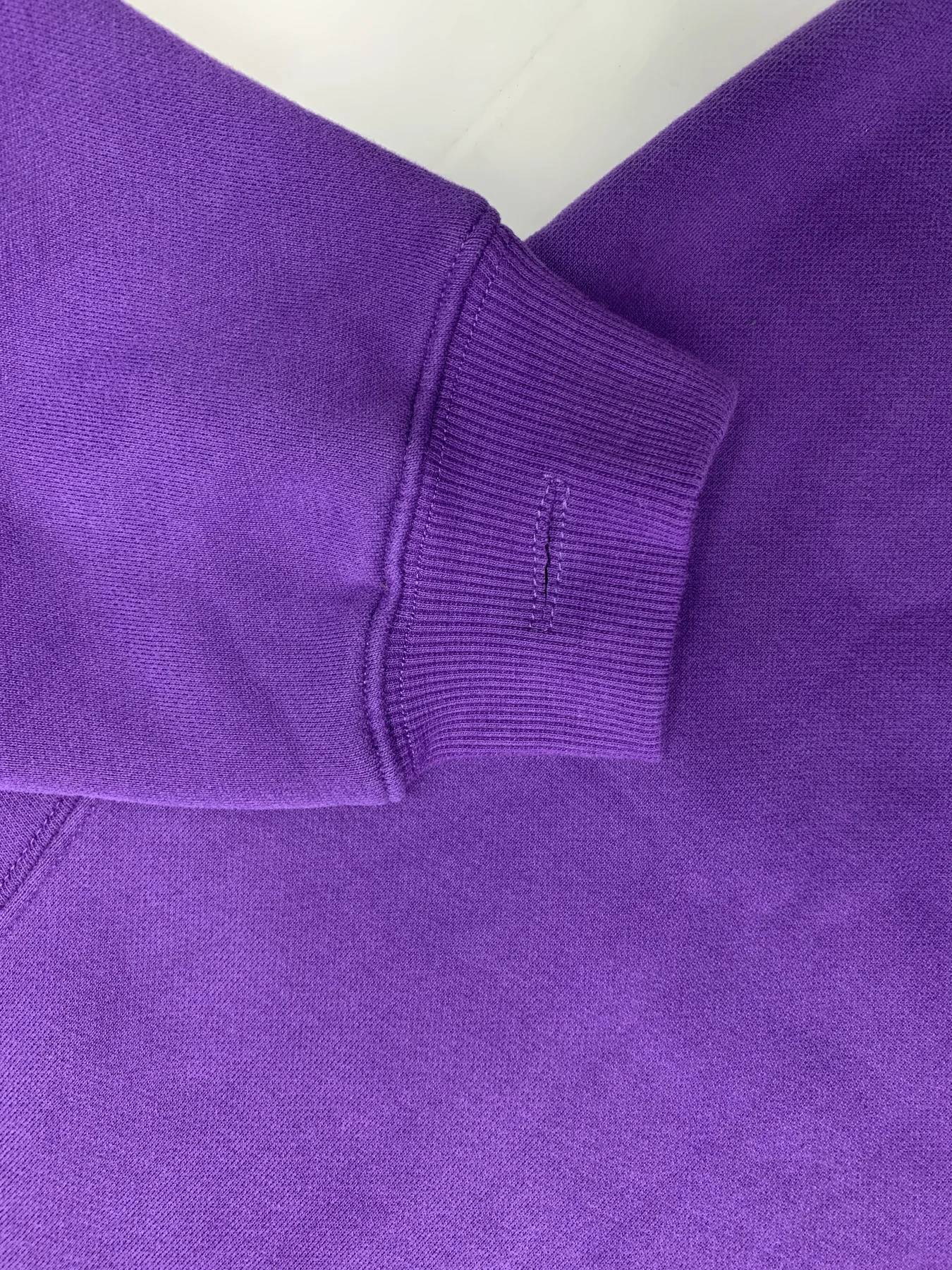
The photograph accompanying this article shows a cuff construction detail. It illustrates why small finishes deserve their own review; it does not establish an acceptance result for an entire order.
Assess print, embroidery and placement
Compare the finished artwork with the approved file at its actual size. Check text, fine details, colors, position and orientation. Use a ruler or the agreed reference points to document a placement question rather than describing it only as too high or slightly off-center.
Inspect the surface and the reverse side where accessible. For embroidery, examine the surrounding fabric and backing. For transfers or prints, review the edge and feel of the decorated area. Compare the exact technique agreed for the order; see our DTG, DTF and screen printing guide if the method is still being selected.
Agree care and dimensional checks
Use documented wash and drying conditions that are relevant to the intended care instructions. Record dimensions before and after the agreed procedure, and photograph any appearance change. CottonWorks explains that dimensional change can involve not only size but also seam puckering, skew and the relationship between garment components in its shrinkage and skewing guide.
If you calculate a change, name the measurement and the sign convention. For example, a change from 60 cm to 58.8 cm is a 2% reduction, calculated as (60 - 58.8) / 60 × 100. This is a calculation example, not a WILDYET specification or an acceptable limit for every fabric.
Avoid approving care performance with comments such as washes fine and no recorded conditions. If a formal test is required, agree the method, laboratory, specimen and acceptance criteria separately.
Turn comments into an approval record
For each issue, record the requirement, observation, requested action, responsible contact and approval status. A practical decision can be approved, approved with a clearly identified correction, or not approved pending a new sample. Make any conditions explicit rather than relying on the status word alone.
- Fit and measurements: what was checked and what remains open.
- Fabric and trims: approved references and any substitutions.
- Decoration: file revision, dimensions, position and sample reference.
- Construction: corrections marked on photos or drawings.
- Care checks: procedure, recorded observations and next steps.
- Production authority: who confirmed the final version and on what date.
Keep the approved sample and final specification available for comparison. Your approval record should be readable by someone who was not involved in the original conversation.
Questions before approving bulk production
Does approving a sample guarantee every bulk piece is identical?
No. Sample approval defines an agreed reference; bulk consistency still depends on production controls and the inspection plan. Discuss the required checks, tolerances, handling of defects and any independent inspection before production, rather than treating the sample as a guarantee about an unexamined shipment.
Can I approve the color from a phone photograph?
A photograph is useful for discussion, but lighting, camera settings and screens can change its appearance. Use the agreed physical color reference where color is critical. Record which swatch or approved sample controls the decision and how an acceptable variation will be evaluated.
What if the fit is right but the decoration needs changing?
Record the fit decision separately from the decoration decision. Identify the exact artwork or process change and agree whether another complete sample or a decoration test is required. The important point is that approval of one feature should not hide an unresolved requirement elsewhere.
Use the checklist for your next sample
Before moving forward, make sure the garment sample approval checklist points to an identifiable sample, a current specification and a clear decision. Review our sample gallery for the kind of detail references used in project discussions, then contact WILDYET with the style and the questions you need to resolve.