Printing
DTG vs DTF vs Screen Printing: A Buyer's Guide
Compare DTG, DTF and screen printing by fabric, artwork, feel and quote structure. Use a practical sample checklist before choosing a method for your order.
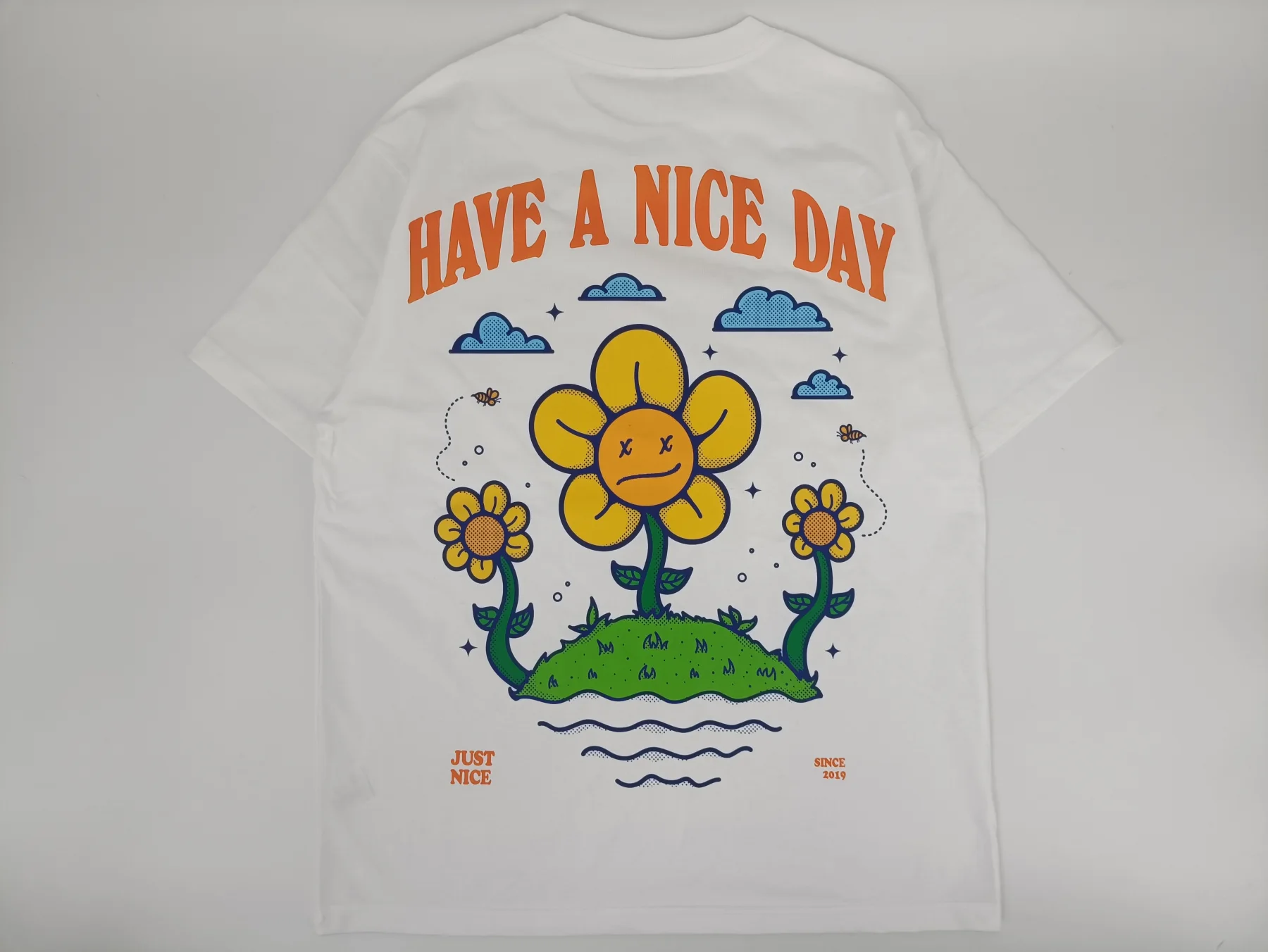
Quick answer: DTG prints artwork directly onto a garment, DTF transfers a printed design from film, and screen printing applies ink through prepared screens. The best choice depends on the actual fabric, artwork, print area, quantity and desired hand feel. Compare physical samples of your design before approving a method for bulk production.
This guide is for independent clothing brands preparing a T-shirt or hoodie order. WILDYET coordinates development, sampling and production follow-up with partner factories from Yiwu, China. The checklist below is a practical way to compare quotations; it is not a promise that one technique will outperform another on every garment.
DTG vs DTF vs screen printing: start with the garment
Do not choose a printing method from a close-up photograph alone. Begin with the garment reference and its fiber composition, surface texture, color and finish. A smooth jersey, textured fleece and washed fabric can present different printing challenges even when the artwork looks identical on a computer.
Also define what the customer should feel. A small chest logo and a large solid back graphic cover very different areas. Ask to handle both the printed section and the surrounding fabric, rather than judging the result only from color saturation.
Our custom apparel categories can help you identify the garment before comparing the available customization options.
What each process changes in your brief
Direct-to-garment printing
DTG uses a digital printer to apply the design directly to the textile. Artwork with gradients or many colors may be worth sampling this way, but the fabric and pretreatment requirements still need review. Epson's DTG and DTFilm process guide explains that white ink and some fabric applications require pretreatment.
For your brief, specify the garment color and the actual print dimensions. Ask how the selected fabric will be prepared and whether the sample uses the same blank or fabric planned for production. A successful print on a different T-shirt is a useful reference, not approval of your own combination.
Direct-to-film printing
DTF prints a design onto film and transfers it to the garment using a compatible adhesive and heat application. That transfer step is the main difference from DTG. Fabric compatibility is broad in some systems, but should still be confirmed for your specific garment and finish.
For a large filled graphic, assess flexibility and surface feel on the finished garment. For small lettering, inspect the edges and open spaces. Ask whether the quoted transfer, adhesive and application process match those used on the approved sample.
Screen printing
Screen printing uses a prepared stencil and mesh to deposit ink. In conventional spot-color work, additional colors involve additional screens and registration. ScreenPrinting.com's screen printing overview describes this color-separation and screen-preparation process.
Ask the supplier to distinguish artwork colors from the complete production setup. A base layer, special effect or additional print location may affect preparation. Instead of assuming that a design with three visible colors means three production steps, request the proposed setup in the quotation.
Compare quotes on the same basis
A cheaper unit price is hard to evaluate when the garment or artwork has changed between quotes. Send each supplier one agreed brief and ask them to identify any substitutions.
- Garment: same style, color, composition and agreed fabric specification.
- Artwork: same file revision, colors and treatment of gradients or fine detail.
- Placement: same finished width and height, print locations and position references.
- Quantity: same breakdown by style, color and size.
- Preparation: identify screen setup, artwork adjustments, pretreatment or transfer preparation where applicable.
- Sampling: identify what is included, what is separately quoted and what changes require a new sample.
Ask for a second method only when it solves a specific question, such as a different surface feel or a simpler production setup. Otherwise, comparing several unrelated alternatives can create more uncertainty than useful choice.
What to inspect on a printed sample
Check the artwork at normal viewing distance first, then inspect the small details. Look at text readability, fine lines, color boundaries, placement and the relationship between the print and the garment seams. Photograph the full garment and a detail view with a ruler when position or scale needs clarification.
For wear and care, agree the checks before approval. Use the proposed care instructions and record the washing and drying conditions. Photograph the same areas before and after the agreed check; do not treat an unrecorded home wash as a universal durability certification.
Keep the approved sample and its written specification together. Our garment sample approval checklist covers the broader decision before bulk production.
Questions buyers often ask
Which method is cheapest for a small order?
There is no universal price winner. Setup, print area, artwork, locations, garment and quantity all matter. Request the total quoted cost for your exact order, with one-time preparation separated where possible, rather than comparing an advertised starting price with a complete production quote.
Is DTF always more durable than DTG?
No useful blanket guarantee follows from the method name. The fabric, consumables, application, curing and care conditions matter. Compare finished samples against agreed checks. If durability is a purchase requirement, define the test and acceptance criteria with the supplier before approving production.
Can I change the print size after sample approval?
You can request a change, but it should be reviewed rather than assumed equivalent. A larger solid area can change feel and production requirements, while a smaller version can lose detail. Update the artwork revision and confirm whether another sample or placement proof is needed.
Send a brief that can be quoted
When choosing between DTG, DTF and screen printing, send the garment reference, artwork file, finished dimensions, placements, quantity breakdown and desired feel. Mark the points that are flexible. Request a WILDYET project quote so the available methods can be reviewed against your design rather than a generic printing ranking.